Part of: Markets and Institutions
Echoes Across a Century: Part 4, Geopolitical Fault Lines
Part of the Markets and Institutions cluster
In this dispatch
In the first three parts of this series, we walked through the economic fault lines shaking the foundations: debt, speculation, and trade wars.
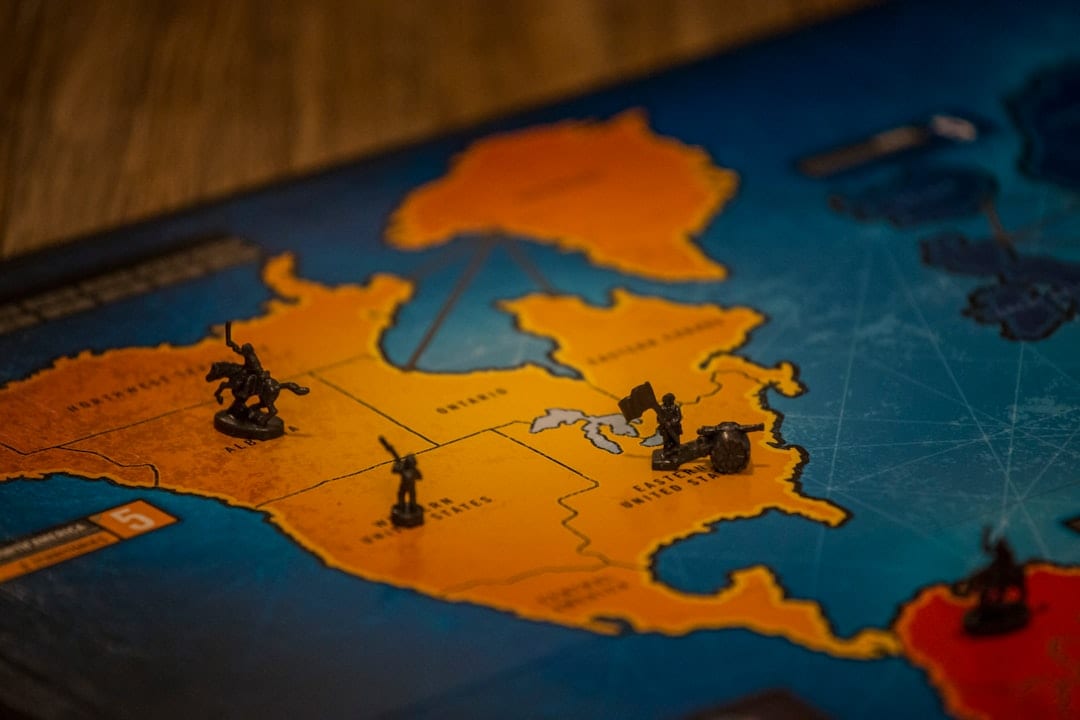
Today we step into even rougher terrain: geopolitical fault lines.
If debt, speculation, and tariffs weaken economies from the inside, geopolitics can rip them apart from the outside.
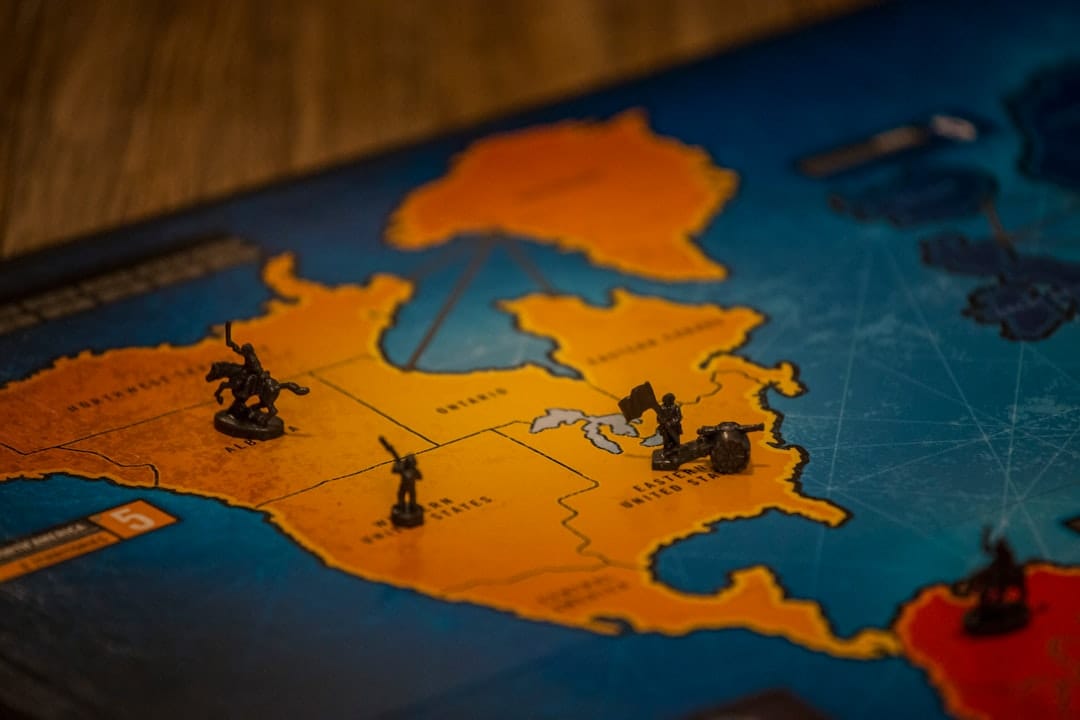
And right now, the global map is crisscrossed with tensions, old ones flaring back to life, and new ones opening wide.
If we’re going to lead effectively in this next era, we need to understand how geopolitical risk has changed, and why ignoring it is no longer an option.
After the Great War: Fragile Peace, Rising Tensions
After World War I, the world stumbled toward what was supposed to be peace.
But the peace was shallow.
Europe was exhausted.
Germany was bitter and broken.
New nations were cobbled together without deep roots.
Old empires: Ottoman, Austro-Hungarian, Russian, collapsed into chaos.
Meanwhile, the United States, the one power with real strength, retreated into isolation.
As Kindleberger pointed out, no one stepped up to stabilize the system. Britain was too weak. America was too unwilling.
Into that leadership vacuum, insecurity and mistrust grew.
The results were devastating: competitive devaluations, protectionism, arms races, and ultimately another, even bloodier, war.
After 2008: Stability Cracks Again
The 1990s and early 2000s felt like a “unipolar moment.” The Cold War was over. Globalization was racing forward. America sat unchallenged at the top.
Then came 9/11, Iraq, Afghanistan, and the slow realization that American power had limits.
The 2008 financial crisis cemented the change.
Confidence in American leadership shattered.
Emerging powers, especially China, saw an opening.
Russia, smarting from its 1990s collapse, began to push back.
The post-Cold War world order cracked, just like the post-World War I order had.
And once again, the world entered a period where old certainties faded and new rivalries surged.
Today’s Flashpoints
U.S.: China Rivalry
The rivalry between the United States and China stands as the most important and dangerous of our time. Trade wars, tech decoupling, military posturing in the South China Sea and around Taiwan, and competing visions for global governance, one authoritarian, one liberal-democratic, have brought tensions to a boil. Neither side is backing down. Instead, both are digging in, reshaping global supply chains and alliances.
Russia and the New Iron Curtain
Russia, having invaded Ukraine, has shattered Europe’s post-Cold War security framework. Energy wars with Europe and renewed proxy conflicts elsewhere have revived the specter of a divided continent. Moscow’s willingness to weaponize food, fuel, and information is a stark reminder that the old Cold War playbook is back, with some brutal updates.
Middle East Volatility
The Middle East remains a volatile chessboard. Iran continues its nuclear ambitions, while Iraq, Syria, and Lebanon simmer with instability. Saudi Arabia and Israel are reshaping alliances, pursuing realignments that were unthinkable a decade ago. Regional rivalries are sharpening, and the risk of flashpoint conflicts remains high.
Fragmenting Alliances
Even traditional alliances are fraying. NATO has been revitalized by the Ukraine war, but internal tensions remain, especially over defense spending and strategic priorities. U.S.-European relations are strained over trade issues and technology policy, while “strategic autonomy” debates in Europe reflect a deeper uncertainty about the future of Western cohesion.
New Powers Rising
New powers are also rising. India is asserting itself more independently, seeking a larger role on the world stage while balancing complex relations with the U.S., Russia, and China. Turkey, under President Erdogan, pursues an unpredictable regional strategy. Across Africa and Latin America, China and Russia are extending their influence through infrastructure investments, arms deals, and political support.
India: Pakistan Tensions
Meanwhile, a new and dangerous flashpoint has emerged between India and Pakistan. In April 2025, a terrorist attack in Pahalgam, Kashmir, killed 26 civilians, including 25 Indian tourists and one Nepali national. India blamed Pakistan-based militants for the attack, leading to a rapid escalation in diplomatic and military tensions. India suspended the Indus Waters Treaty, downgraded diplomatic ties, and closed border crossings. Pakistan responded by closing its airspace to Indian airlines and warning that any diversion of water would be considered an act of war. Both nations have increased military readiness, raising fears of renewed conflict between the nuclear-armed neighbors.
Why Geopolitical Risk Matters More Than Ever
In the past, many business leaders could afford to treat geopolitics as background noise.
Not anymore.
Today, geopolitical events move markets, disrupt supply chains, shift regulations, and reshape industries in real time.
Some examples from just the past few years:
Tariffs on Chinese goods upended supply chains across electronics, retail, and manufacturing.
Sanctions on Russia created massive disruptions in energy, commodities, and finance.
Semiconductor export controls reshaped the global tech landscape overnight.
Shipping route disruptions (Suez Canal blockage, Red Sea conflicts) snarled logistics worldwide.
Even companies “far” from politics, small manufacturers, local banks, startups, feel the ripples.
Ignoring geopolitics today is like ignoring the weather forecast in a hurricane zone.
It’s not just risky. It’s reckless.
What History Teaches About Leadership in Volatile Times
In unstable periods, leaders who survive and thrive do a few things differently:
1. They Watch the Periphery
Major shocks often come from “small” places.
A bank failure in Austria triggered global panic in 1931.
The assassination of an archduke in Sarajevo sparked World War I.
Today’s equivalent? A flare-up in Taiwan, a coup in a key supply chain country, a cyberattack on financial networks.
Small sparks can light big fires.
2. They Think in Scenarios, Not Forecasts
Linear thinking fails in multipolar worlds.
Smart leaders plan for multiple plausible futures, not just “the most likely” outcome.
3. They Build Organizational Agility
In volatile times, the best plans mean nothing if you can’t pivot fast.
Leadership agility, decision-making speed, cultural flexibility, operational adaptability, becomes a strategic weapon.
4. They Balance Risk and Opportunity
Geopolitical shifts aren’t just threats. They create openings.
New markets.
New partnerships.
New supply lines.
But only for organizations alert and ready to move.
5. They Communicate Calmly and Clearly
Turbulent environments breed anxiety.
Strong leaders anchor their teams with clear, steady communication.
How Leaders Should Prepare
1. Build Geopolitical Awareness In-House
Don’t outsource risk analysis entirely.
Have someone on your leadership team, or a trusted advisor, responsible for monitoring geopolitical risks and flagging major shifts.
2. Map Your Exposure
Understand how dependent you are on:
Specific regions (for supply, sales, funding).
Stable trade routes.
Critical technologies vulnerable to sanctions.
3. Stress Test Operations for Disruption
Could you survive a shipping blockade? A major market closure? A commodity price shock?
Model the scenarios. Build contingency plans.
4. Strengthen Regional Diversification
Over-concentration is risky.
Organizations with flexible, regionalized operations will fare better than those tied too tightly to one geography.
5. Invest in Trusted Relationships
When formal systems wobble, informal networks matter more.
Strong relationships, with customers, suppliers, regulators, and communities, create resilience.
Final Thought
The world isn’t “ending.” But it is shifting.
The post-Cold War order is gone. A new one hasn’t yet taken its place.
In the gaps between power centers, risk flourishes. So does opportunity.
Leaders who understand this moment, who build agile, resilient, situationally aware organizations, won’t just survive. They’ll lead.
History shows that those who adapt to geopolitical realities early win big.
Those who don’t? They become footnotes.
The choice is ours.
Coming Next in the Series:
Part 5: The Vacuum of Leadership
How the absence of a global stabilizer can turn small shocks into systemic crises, and what leaders can learn from past failures to step up.
Thanks for reading The B:Side Way with Chris Myers! This post is public so feel free to share it.
Echoes Across a Century: Part 5, The Vacuum of Leadership
How the Absence of a Global Stabilizer Turns Crises Into Catastrophes
Echoes Across a Century: Part 6, Preparing for What's Next
How Organizations Can Build Resilience, Agility, and Strength in an Era of Global Instability