Crisis leadership training for executive teams.
Align the executive team before the next irreversible decision. For boards and leadership groups carrying a call they cannot afford to mishandle. We map default modes, surface the team's collective shadow, and build a shared decision code. Diagnostics, facilitated workshops, and advisory from $7,500.
What crisis leadership training for an executive team involves.
Crisis leadership training gives an executive team a structured way to examine a decision with incomplete information, competing obligations, and a deadline. The Five Modes provide different questions to ask: what must hold, what power should be restrained, what compromise costs, what needs to change, and what should endure.
An engagement starts with a diagnostic: each leader is assessed individually, and the self-reported results build a Team Mode Map and a Shadow Heat Map for discussion. The team tests those patterns against concrete examples. Chris then leads a working session against one decision the team is actually carrying, not a hypothetical. The session ends with a written decision code the group has agreed to, which is the part that survives the room. Teams that want it to survive the calendar continue into advisory and the Three Pillars Audit.
The team's decision architecture, made visible.
Every executive team has risks it can see and risks it would rather not name. The ones that bend a team under pressure are the hardest to put on a dashboard. We surface them.
Team Mode Map
The approaches each member selects in the assessment, summarized across the team. Use the map to ask which perspectives need a stronger voice in the decision.
Shadow Heat Map
Possible liabilities for the team to examine: where a shared strength may narrow the questions people ask. Test the pattern against actual examples.
Organizational Code Workshop
A half- or full-day working session on the Five Modes, led by Chris, applied to one real decision your team is actually carrying right now.
Three Pillars Audit + Advisory
A structured audit of the three pillars under the team (character, competence, and connection), with ongoing executive advisory as the pressure and the decisions keep arriving.
Diagnose, convene, embed.
Three phases, scoped to your team. Most engagements begin with a diagnostic and grow from there.
Diagnose
Individual assessments roll up into a Team Mode Map and Shadow Heat Map. These self-reported patterns help shape the questions for the working session.
Convene
A working session led by Chris, applying the Five Modes to one live decision, building a shared code the whole team can hold under pressure.
Embed
The Three Pillars Audit (character, competence, and connection) plus ongoing advisory, so the code survives past the offsite and into the decisions that actually test it.
Start with the pressure that is already in the room.
Six focused entry points use the same diagnostic and decision architecture, adapted to the institution and decision at hand.
ICBC keynote · Leadership in the crisis era
Prepare your bank for its next hard decision.
For credit union leadership teams
Hold member trust while the operating model is forced to change.
For boards and governing bodies
Make the governance boundary visible before the irreversible vote.
For executive teams
See how the team behaves under pressure before the next decision exposes it.
For succession committees and leadership teams
Transfer judgment, not just authority.
For leaders adopting AI
Use AI to widen judgment without outsourcing responsibility.
Bring the framework to your stage.
Keynotes and working sessions for leadership teams, conferences, and boards navigating the crisis era. Grounded in historical cases and operating experience, and built around a decision your audience is carrying.
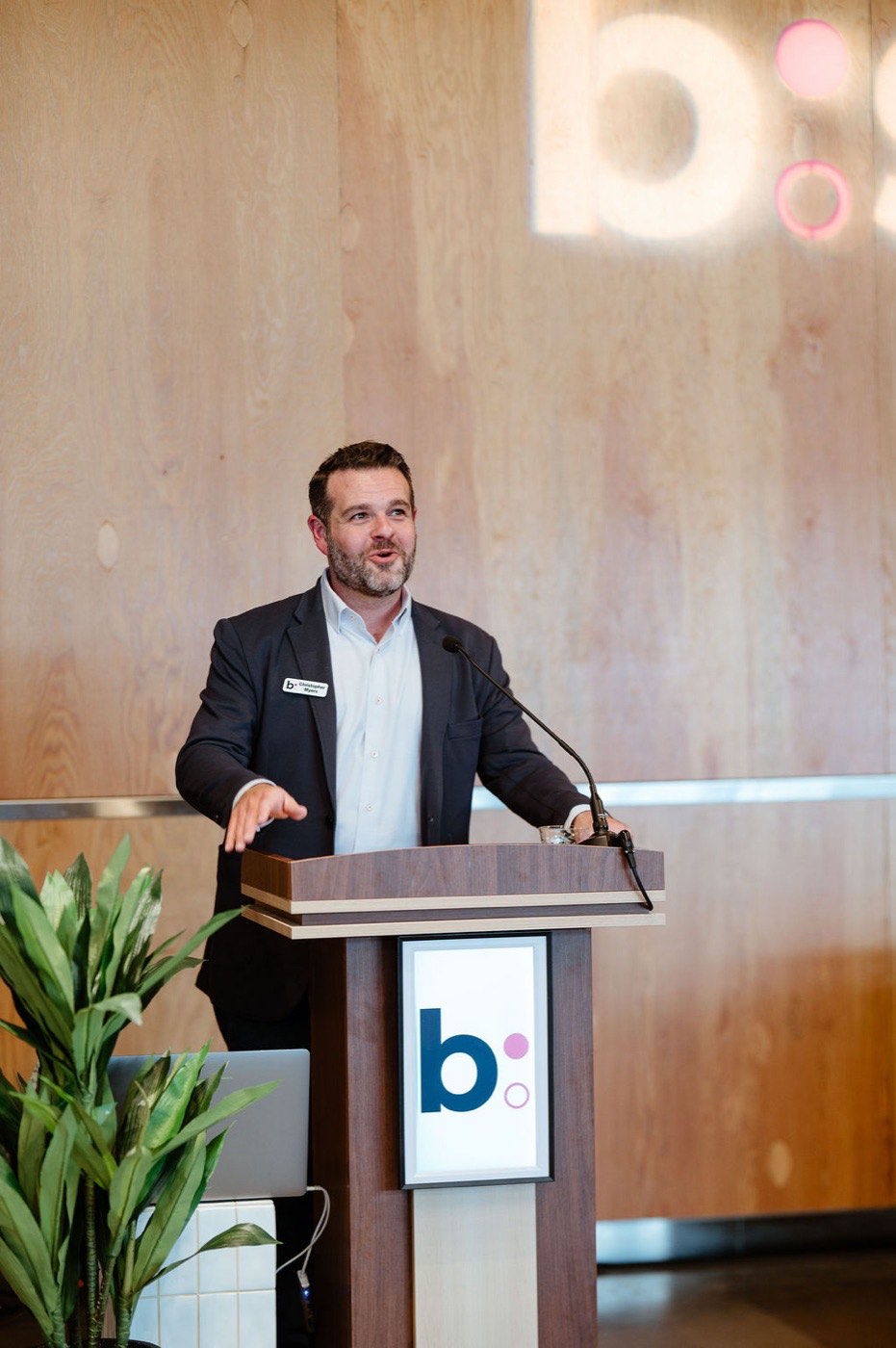
Chris speaks from the operator's chair, not the lectern. Every talk is built around the decisions your audience is carrying right now, and the practice for holding their code when the pressure peaks.
The full page has the four talks, the formats, and the fees.
As Featured In






Institutional Affiliations
Before you get in touch.
How does a team workshop differ from a speaking intensive?
A speaking intensive combines a keynote with a facilitated session for the event audience. An organizational engagement begins with individual assessments and a Team Mode Map, then applies the findings to a decision owned by that team. The proposal makes the preparation, included phases, deliverables, and total fee explicit.
What is crisis leadership training for executive teams?
The engagement uses self-reported assessment patterns to prepare a discussion about a consequential team decision. Chris facilitates the examination of facts, obligations, dissent, and the cost of each option. The team writes a decision code and named commitments to revisit in practice
What does an engagement include, and how is it structured?
Three phases, scoped to the decision in front of the team. Diagnose produces the Team Mode Map and the Shadow Heat Map from individual assessments. Convene is a facilitated working session led by Chris, applied to one live decision rather than a hypothetical. Embed is the follow-on advisory and the Three Pillars Audit, for teams that want the code to survive contact with the calendar. Most teams start with the first two.
How much does crisis leadership training cost?
Diagnostic engagements begin at $7,500. Facilitated workshops begin at $18,000. Embedded advisory is scoped to the engagement and quoted directly. Your proposal lists the selected phases, preparation, deliverables, travel, and total fee before you book. Pricing depends on the size of the team, how many sessions the program runs, and whether the work ends at the session or continues into advisory.
Are sessions virtual or in person?
The diagnostic is completed individually before the working session. Tell us your team’s location and preferred format when you inquire. The proposal confirms delivery arrangements, preparation, and any travel before you book.
How far in advance should we book?
Plan on about four weeks. That is enough time to run the individual assessments, build the Team Mode Map from self-reported responses, and shape the session around a decision the team is genuinely facing. Shorter timelines are sometimes possible; the diagnostic is the part that cannot be compressed without weakening the session it feeds.
Who is this for?
Boards, executive teams, and leadership groups carrying a decision they cannot afford to mishandle. It is built for organizations where the decision is already on the table and the disagreement is real: community banks and lenders, credit unions, universities, and executive teams inside institutions under sustained pressure. It is not a general management course, and it works badly as one.
Start with a conversation.
Tell us about your team and the pressure it's deciding inside. We'll follow up to scope a diagnostic, a workshop, or a full engagement.
Led by Chris Myers · CEO, B:Side Capital & B:Side Fund · Founder & Chairman, Main & Machine · Faculty, ASU W. P. Carey
The New York Times · The Wall Street Journal · Forbes · Entrepreneur
Inquiry
Discuss a workshop or diagnostic
Tell us about your team and what's pressing.