Part of: Crisis Leadership
Ethical Authority Guide for Leaders Under Pressure
In this dispatch
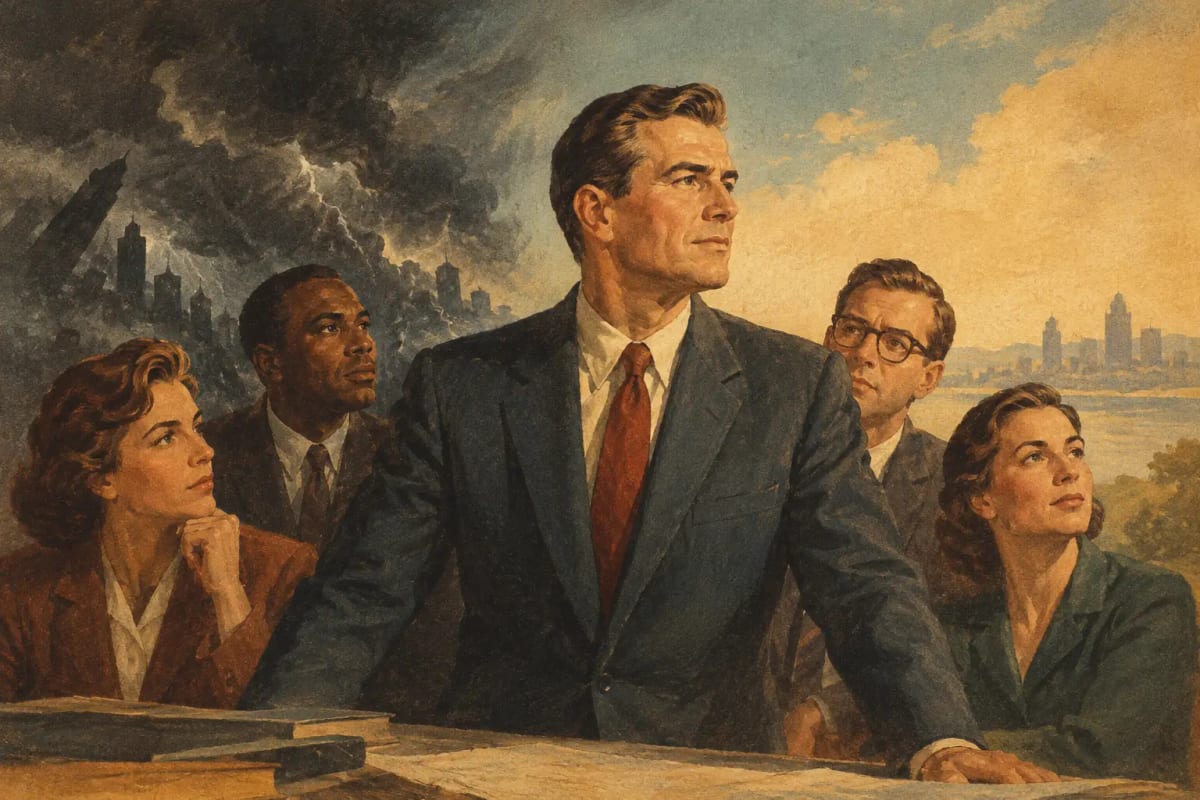
A board can grant a chief executive formal authority in an afternoon. It cannot grant moral authority at all. That authority is earned when a leader makes a difficult decision, accepts the cost, states the standard, and leaves behind a record that can withstand hostile review. This ethical authority guide is for leaders whose choices affect payrolls, customers, capital, public trust, and the institutions that must outlast them.
Crisis does not usually create a leader’s ethics. It reveals the code that was already operating beneath the language of values, mission, and compliance. When revenue falls, a regulator calls, a senior executive fails, or a public controversy arrives at the gate, leaders revert to instinct. Some delay. Some perform certainty. Some protect themselves. Some act with force but without restraint.
The question is not whether you will use power. If you lead, you already do. The question is whether power is held in trust.
What Ethical Authority Actually Requires
Ethical authority is not reputational polish. It is the recognized right to direct action because those subject to your decisions can see that you are bound by standards as well as incentives. It joins moral restraint to executive force.
A leader with ethical authority can terminate an employee, close a division, refuse a politically convenient demand, or make an unpopular investment. The action may still cause pain. It may still be contested. But it is intelligible. The reasons are clear, the process is proportionate, and the leader does not ask others to carry a burden he or she refused to bear.
This is why legal compliance is necessary but insufficient. Law establishes a floor. Authority is judged above that floor: by whether the leader told the truth when concealment was available, protected the vulnerable when expedience favored the powerful, and preserved institutional purpose when short-term incentives pointed elsewhere.
George Marshall understood this distinction. His authority did not rest on force of personality. It rested on demonstrated discipline, impartial standards, and a visible subordination of self-interest to national duty. The scale was historic, but the principle applies in a family business, a bank, a university, or a growth-stage company. People follow hard decisions longer when they believe the decision-maker is also governed.
An Ethical Authority Guide Begins With Diagnosis
Most executives do not fail because they lack values. They fail because their values have not been organized into a usable operating code. A statement such as “we act with integrity” offers no instruction when a major customer requests favorable treatment, a founder wants an exception, or a board member pressures management to bury bad news.
Begin by diagnosing your default mode under pressure. Do you become the Guardian, protecting stability and continuity? The Builder, driving toward growth and action? The Judge, insisting on rules and evidence? The Steward, preserving relationships and long-term obligations?
Each mode carries a strength. Each also carries a shadow. Guardians can preserve a failing arrangement too long. Builders can confuse speed with courage. Judges can let procedure become avoidance. Stewards can mistake harmony for justice. Ethical authority requires leaders to know the shadow that arrives with their strongest trait.
Do not treat this as a personality exercise. Make it operational. Review the last three consequential decisions you made. Identify where you delayed, overreached, softened a standard, withheld information, or allowed a favored person to receive an exception. Patterns become visible quickly when examined against actual decisions rather than self-description.
The crisis is the audit. Your record will show which value had real force when values collided.
Write the Code Before the Test
A usable honor code is short enough to remember and specific enough to constrain conduct. It should name duties that remain binding when compliance, reputation, profit, and political comfort pull in different directions.
For a chief executive, the code might establish that material facts will not be concealed from the board; that no employee will be asked to bear a risk the executive team has not openly assessed; that financial reports will favor accuracy over appearance; and that personal loyalty never overrides fiduciary duty. These are not slogans. They are commitments that create obligations.
The language matters. “We value transparency” is too soft to govern a hard meeting. “We disclose material downside to the board before seeking approval” can be tested. “We treat people fairly” is admirable but vague. “We apply the same investigation standard to senior leaders and junior employees” creates an enforceable expectation.
There is a trade-off here. The more detailed a code becomes, the easier it is to administer but the more likely it is to become a compliance manual. The more general it becomes, the easier it is to endorse but the easier it is to evade. Keep the code principle-based, then attach decision rules for recurring risks: conflicts of interest, layoffs, customer harm, executive misconduct, political pressure, and capital allocation.
A code also needs hierarchy. When two duties conflict, which governs? Truthfulness may require disclosure that damages morale. Loyalty to employees may conflict with a duty to preserve solvency. Fairness may conflict with speed during a safety event. Mature leadership does not pretend these tensions disappear. It identifies who has authority to decide, what evidence is required, and what must be recorded.
Turn Judgment Into a Record
Private conviction is not enough for institutional leadership. Decisions must be documented because memory changes under pressure, personnel turns over, and future reviewers will not have access to your intentions.
For every high-consequence decision, create a decision record. State the facts known at the time, the duties in conflict, the realistic options considered, the decision reached, the owner accountable for execution, and the conditions that would require reversal. Include the dissent if there was dissent. A clean record does not prove you were right. It proves you took judgment seriously enough to be examined.
This discipline protects against two common failures. The first is retrospective self-justification, in which leaders rewrite a messy decision as inevitable. The second is organizational amnesia, in which a company repeats a preventable mistake because no one preserved the prior reasoning.
Lincoln’s leadership during the Civil War offers a demanding standard here. He did not avoid moral ambiguity, but he refused to make ambiguity an excuse for inaction. He sought counsel, weighed constitutional duty against military necessity, revised judgment when facts changed, and accepted that every serious decision would be judged. That is not indecision. It is accountable command.
Make Standards Visible in the Organization
Employees do not learn the real culture from the values page. They learn it from who gets promoted, whose conduct is excused, what gets investigated, and whether bad news travels upward without retaliation.
Ethical authority becomes organizational only when standards are built into these systems. Compensation should not reward revenue obtained through conduct the company would be ashamed to defend. Performance reviews should assess judgment, not merely output. Escalation routes should allow material risk to reach the right level quickly. Succession plans should examine character alongside competence.
This will create friction. Strong performers may resist scrutiny. Rainmakers may demand exemptions. A board may prefer a quiet resolution over a public standard. The leader’s task is not to make every conflict painless. It is to ensure that exceptions are rare, disclosed to the proper authority, and recorded with reasons.
The standard must apply upward. Nothing destroys ethical authority faster than a leadership team that demands discipline from employees while treating itself as exempt. If the chief executive receives special treatment in investigations, expenses, disclosure, or performance review, every stated value becomes conditional.
Use Pressure Drills Before a Real Crisis
A code that has never been tested is an aspiration. Stress-test it through scenarios drawn from your actual exposure: a data breach, a lender covenant issue, a discrimination claim against a top executive, a product safety defect, a politically charged customer dispute, or a liquidity shortfall.
Ask the hard questions. What would we disclose in the first twenty-four hours? Who has authority to speak? What evidence would change our position? Which stakeholder receives protection first? What would we refuse to do even if it reduced immediate loss?
Run the exercise with the people who will be in the room when pressure arrives. Let dissent appear. Identify where authority is unclear, where incentives conflict, and where the organization has no reliable record. Then revise the code and operating procedures before a real event forces improvisation.
The purpose is not to predict every crisis. It is to build the habit of acting from declared duty rather than panic.
Ethical authority is not proven by a polished speech after the fact. It is built in the prior discipline: the code written, the exception refused, the dissent preserved, the hard call made before pressure makes it for you.
Executive Decision Log Template for Hard Calls
Use an executive decision log template to record the facts, judgment, dissent, and accountability behind high-stakes leadership calls under scrutiny now.
Leader Mode Assessment Guide for Hard Calls
This leader mode assessment guide helps CEOs identify their default under pressure, confront its shadow, and build decision records that hold scrutiny.