The Leadership Honor Code
The pre-committed decisions a leader makes before pressure arrives.
In this pillar
A leadership honor code is a set of decisions a leader makes before pressure arrives. It is a binding pre-commitment about what a specific leader will and will not do when complexity collapses and only character scales, not a values statement or a list of principles on a wall.
It has to be written in advance because a code written under pressure becomes a rationalization for what you already wanted to do. A working code is specific enough to test: clear lines, named exceptions, and the costs you are willing to pay to hold them.
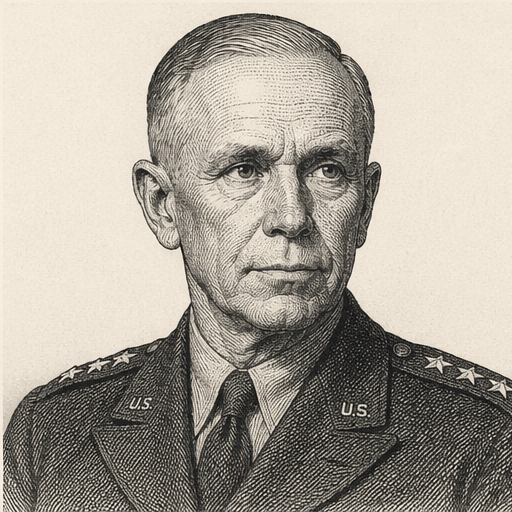
Years before the war that made him Army Chief of Staff, George Marshall kept a small black book of officers who met his standard. When 1940 arrived and the hardest personnel calls of a generation landed on his desk, most of those decisions were already half made. He had committed to the standard while the stakes were still abstract. Most leaders do the opposite: they meet their hardest call with nothing decided in advance, and the call gets made by adrenaline, incentives, and fear dressed up as judgment.
This is the pillar for the honor code: what it is, why it has to be built in advance, and how to write one that holds. The resources and essays below go deeper on each part.
What a leadership honor code is
An honor code is a working architecture for behavior under cost. It tells a leader what cannot be traded, what must be protected, and which compromises are legitimate versus which are simply erosion with better language.
Values describe. A code decides.
Most leaders can articulate their values: integrity, excellence, courage. These are not wrong, but they are incomplete. Values describe what you care about in the abstract. They do not tell you what to do at 11 PM when the board is asking you to sign something you know is wrong.
A code is different. A code is operational. It answers specific questions in advance: what will I not do, regardless of the business case? What is the minimum standard I will hold, even when no one is watching? What will I say when the pressure is to say something else?
Values are a declaration. A code is a decision-making system. You need both, but in a crisis, the code is what you reach for.
Why a code has to be built before pressure
A code written under pressure is not a code; it is a rationalization for what you already wanted to do. The point of writing it in advance is that the hard decision is partly made before the stakes arrive to distort it.
In a stable environment, policy and consensus and institutional trust carry more of the weight, and a vague set of values can pass for a code. When those supports weaken, and in this era they are weakening, the leader is left with whatever they wrote down before the room got hard.
Policy weakens
A policy can route a decision, but it cannot carry the moral weight when the institution is protecting itself.
Consensus thins
Waiting for alignment can become a sophisticated form of avoidance when trust is already low.
Incentives distort
The rewards of the moment often favor fear, appetite, approval-seeking, or control.
What goes into a working code
A usable code is specific enough to be tested: clear lines, named exceptions, and the costs you are willing to pay to hold them. Vague virtues do not survive contact with a real decision; pre-committed specifics do.
The five parts of a working code
A complete leadership honor code has five parts, each drawn from a leader who held it under maximum cost. Together they are the definition and the examples: what each part is, and what it looked like when it was tested.
- The Line: what you will not trade
- The commitments decided in advance that hold regardless of circumstance. The line Cato held was constitutional government, and he held it at the cost of his life. Without a line, every decision is negotiable; with one, the negotiation has a floor.
- The Restraint: the power you will not use
- A code is also about what you will not do with power you legitimately hold. Washington had the authority, the loyalty, and the justification to stay in command. He left anyway, twice. Leaders without a restraint commitment drift toward using every power they possess.
- The Test: reasoning you can explain
- Name a person whose judgment you trust to challenge your own. Explain the decision, the costs, and the compromises without leaving a step out. This independent check helps you notice when a persuasive explanation has become a rationalization.
- The Growing Edge: what the crisis is making you
- Growth under pressure is only possible if you are willing to be wrong about where you began. Lincoln left the presidency larger, sharper, and more morally serious than he entered it. The question is whether this season of pressure is developing you or only making compromise more comfortable.
- The Transmission: what will outlast you
- A code that only works while you are present is a personality, not a code. Marshall measured his success by what survived his departure. The highest form of leadership is architectural: systems of integrity that hold without requiring your presence.
The code and the five modes
The honor code is what lets the five modes function without becoming performance or self-protection. It is the structure that tells a leader which mode a given moment is actually calling for.
How to build yours
Start by seeing how you lead under pressure today, then write the commitments that would have changed your hardest past calls. The free 5-minute Mode Finder is the entry point, and the guides below walk through building the code itself.
Frequently asked
What is a leadership honor code?
A leadership honor code is a set of decisions a leader makes before pressure arrives, binding them to what they will and will not do when complexity collapses and only character scales. It is a working architecture for behavior under cost, not a values statement on a wall. It names what cannot be traded, what must be protected, and which compromises are legitimate rather than erosion with better language.
How do you write a leadership honor code?
You write a leadership honor code by naming specific lines, the costs you will pay to hold them, and the failure mode you have already shown under pressure. Write toward the leader you actually are rather than the one you wish you were, because an aspirational code breaks in the first hour of real pressure. The sequence is to name the line, name the cost, name the shadow, name the practice that keeps the code alive, and name the witness who can tell you when you are drifting.
What is the difference between an honor code and a values statement?
A values statement describes who a leader hopes to be; an honor code commits a leader to specific actions when those values become expensive. Values tend to be abstract and universally agreeable, which is exactly why they offer no guidance at the moment of decision. An honor code names the concrete line and the price, so it still functions when holding to it costs something real.
Why does an honor code have to be written before a crisis?
An honor code has to be written before a crisis because a code written under pressure is a rationalization for what you already wanted to do. Writing it in advance means the hard decision is partly made before the stakes arrive to distort it. The whole value of the code is that it was set while the cost was still abstract.
What should a leadership honor code include?
A working honor code includes clear lines you will not cross, the named costs you are willing to pay to hold them, an honest account of your own shadow, a practice that keeps the code alive between decisions, and at least one witness who can challenge your drift. Vague virtues do not survive contact with a real decision, but pre-committed specifics do. The test of any line is simple: a line you have not priced is not yet a line.
How do I start writing my own honor code?
The starting point is seeing how you lead under pressure today, which the free 5-minute Mode Finder surfaces by returning your primary mode and the shadow where your strength becomes a liability. From there you write the commitments that would have changed your hardest past calls. The guides and essays below walk through building the full code step by step.
Go one level deeper
Articles in this cluster
Guides and resources
- Honor Code Examples for Executives: What a Real One Looks LikeHonor code examples for executives: what a real one looks like, line by line, and how a working code differs from a wall of values.
- How to Build a Leadership Honor CodeA leadership honor code has to be specific enough to be tested. That is where most leaders get this wrong. They write words they admire instead of rules they are willing to live under.
From the Dispatch
- An Honor Code for Executives Under PressureAn honor code for executives turns stated values into decision standards, records, and consequences when pressure, incentives, and legitimacy collide hard.
- The Audit of RestraintsEvery guardrail America assumed was character is being cost-tested at once.
- The Counter-Cohn FileThe proof that honor wins: what Katharine Graham and Paul Volcker knew about the long game that Roy Cohn never learned
- The Cohn DoctrineIt has been the most successful operating system of the decade. Here is the case for honor anyway.
- What Is a Leadership Honor Code? (And Why Every CEO Needs One Before the Next Hard Call)A set of decisions you've already made, written, specific, and tested, so that stress can't renegotiate them when the hard call arrives.
- The Only Thing That Still ScalesWhen institutions decay and the tools built for stability stop working, character becomes the rarest competitive advantage there is.
- Leaving Power on the TableVoluntary limitation built the American experiment. Its absence is showing up everywhere leadership matters, and the bill is coming due
- The Proximity ParadoxWhen you serve a chaotic master, influence and complicity grow on the same vine. The hardest discipline is seeing the moment they trade places.
- The Lincoln TestThe most punished act in American public life is changing your mind. The leaders who matter next will do it anyway.
- Show Me the Incentive The talks in Islamabad failed for the same reason most negotiations fail. The signals were there the whole time.
- Leadership Begins With Self-CommandWhy the Hardest Part of Leading a Company Is Governing Yourself First
- The Hard Way HomeWhy the hard way is the only way forward
- The Weight of Choice: Why Character Reveals Itself in the Small Decisions The moments that define us are rarely the ones we expect.
- Make This Your Defining MomentHard years separate managers from leaders. Choose your response. Lead with dynamism, boldness, and grace.
- Discipline Builds TrustWhy Teams Follow Leaders Who Are Steady: Not Just Smart
- Choosing Character When No One’s WatchingThe most important decisions we make are the ones no one sees.
- Conviction Is a Choice, Not a TraitWhy your beliefs mean nothing without action
- Don’t Avoid DifficultyThe strength you’re looking for is hiding inside the pain you’re running from
- Hold the LineHow We Will Stay Calm When the World Goes Mad
- When Pride Leads, Leaders FallThe root cause of most blowups isn’t strategy, it’s ego, pride, and a lack of self-awareness.
- Leadership is About CharacterWhy Integrity Shapes Great Leaders
- Balancing Resistance and InfluenceResist or Influence? Part 5 - A Path Forward for Leaders
- The Limits of InfluenceResist or Influence? Part 4 : Knowing When to Leave
- The Cost of CompromiseResist or Influence? Part 3 : Seneca’s Risky Influence
- The Integrity TrapResist or Influence? Part 2 : Cato’s Uncompromising Stand
- Leadership in The Trump 2.0 Era: Resist or Influence? Part 1: When Principles and Power Collide
- Embracing the CrucibleHow Suffering Shapes Strength, Wisdom, and Greatness
- Ancient Wisdom for Modern LeadersKautilya and the Arthashastra
- Reading Between the LinesHow to Decode the Hidden Intentions Behind People's Words, Actions, and Behaviors
- Finding Peace in a Chaotic WorldLessons from Marcus Aurelius
- How to Lead with ResilienceDetach from Opinions to Strengthen Your Leadership
- The Power of WordsBuilding or Breaking Your Leadership Legacy
- The ChaseBuilding Curiosity in Your Leadership Style
- Leadership in ActionWhy Ownership and Trust Are the Foundations of Great Teams
- Bend the Rules, But Don’t Break the Trust.Why Breaking the Rules Can Be a Smart Move For Leaders
- Battling ResistanceLessons in Getting Out of Your Own Way
- Lessons in CourageWhat Jimmy Carter’s Authentic Leadership Can Teach Us About Conviction and Character
- Choosing Joy When Life Isn’t EasyLessons from the Hardest of Times
- The Leadership DilemmaWhen Ambition Threatens the Republic
- Adversity Fuels SuccessTurning Setbacks Into Your Greatest Asset
- Self-Discipline and HonorLessons from George C. Marshall
- Quantum LeadershipWhy Wave-Particle Duality Is The Key to Flexible Leadership
- Facing the Future Without FearA Lesson from Marcus Aurelius
- Decentralized Decision MakingEmpowering Leadership the Omar Bradley Way
- Embody, Don’t ExplainLiving The B:Side Way
- Comfort is the Worst AddictionWhy Staying a Little Uncomfortable is the Key to Growth and Fulfillment
- The Intersection of IdeasPowering Innovation through Integrated Thinking
- Walking AloneLeadership Lessons from Musashi’s Solitude
- Crying Out in the WildernessThe Challenge of Changing a Dysfunctional Organization from Within
- Overcoming Resistance and Embracing RoutineHow I Wrote The B:Side Way
- The Perils of Personal Desire and Inflated Self-ImportanceLessons from George Armstrong Custer
- Courage, Humility, and GenerosityMy Father’s Guide to Leadership
- Mission Statements and ValuesBeyond Words on a Wall
- The Lindy Effect in LeadershipCultivating Longevity and Wisdom
- Confronting with PurposeFocusing on Values Over Incidents
- From Struggle to StrengthThe Power of Discipline
- Lessons from "How to Be a Bad Emperor"Ancient Wisdom for Modern Leadership
- If It Was Easy, Someone Else Would Have Done ItComplexity And Challenges Are Just Part Of The Job
- The Tao of LeadershipEmbracing Quiet Influence in a World of Celebrity CEOs
- The Perils of ComfortHow Embracing Hard Work and Life's Challenges Leads to a Fulfilling Life
- "Perhaps"A Stoic Approach to Navigating Uncertainty
- The Power of High AgencyDriving Change in Yourself and the World
- Navigating Power DynamicsThe Key to Meaningful Feedback
- The 'More Of/Less Of' TechniqueA Simple, Effective Way to Give Feedback
- The Path to MasteryCombining Diverse Skills Into Something Special
- Embracing the ShadowThe Power of Confronting Your Dark Side in Leadership
- Navigating the Ethics of Persuasion in LeadershipStrategies for Inspiring and Influencing with Integrity
- The Power of Asking Questions:Driving Accountability in Leadership
- Leading Through LegacyThe Transformative Power of Storytelling in Leadership
- Moral ClarityStoic Leaders on the Essence of Righteous Action
- Unbusy Leadership The Art of Deep Work in a Distracted World
- The Stoic Leader's Edge in JudgmentAdapting to Thrive
- Unexpected On-the-Spot RewardsThe Leader's Tool for Instant Recognition
- The Checklist StrategyGuiding Leaders to Clear Decision-Making
- Credible LeadershipThe Acknowledgment of Limits
- Calm in the StormThe Stoic Leader's Guide to Unshakeable Composure