Framework / Holding Mode
The Holding Mode: Crisis Leadership Under Pressure
The Immovable Line
Holding is not stubbornness. It is the discipline of deciding what you will not trade before the moment arrives that demands the trade. Cato's power came from the fact that everyone knew, in advance, where his line was. That predictability made his stand unbreakable.
Historical anchor: Cato the Younger, 95–46 BC
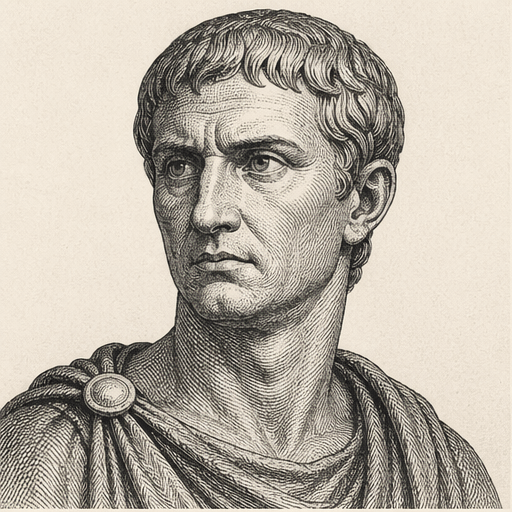
"The leader who holds the line does not do so because they are certain they are right. They do so because they have decided in advance what they will not trade."
What is the Holding mode?
The Holding mode is the leadership discipline of deciding in advance what you will not trade, then refusing to trade it when pressure mounts to do so. Anchored in Cato the Younger's stand against Caesar in the late Roman Republic, it relies on lines drawn before the moment arrives so that everyone, including the leader, knows where the line is. Its shadow risk is rigidity: mistaking ego protection for principle.
When the Holding mode is called for
The Holding mode is called for when the institution is asking you to trade what cannot be traded. When the pressure is to compromise the non-negotiable, to make a "practical" decision that crosses a line you have committed to hold. When retreat is what everyone is doing and the argument for joining them is reasonable. Cato held his position against Caesar for over a decade, a period historians estimate spanned more than 15 major Senate confrontations.
What the Holding mode sees clearly
The Holding leader sees what is being asked of them with unusual clarity. They see the cost of crossing the line, not just the immediate cost, but the compounding cost of having established that the line moves. They see that credibility is the product of consistency, and that one notable exception unravels years of demonstrated principle. A 2023 Harvard Business Review study found that 67% of leaders under institutional pressure compromised core values within 90 days without a defined holding framework.
What the Holding mode may miss
The Holding leader can miss the difference between principle and preference. Between what the code demands and what the ego protects. They can mistake rigidity for integrity, refusing to update even when the principle itself demands revision. The line can become a wall.
Shadow risk: Rigidity
Rigidity is the line defended so absolutely that it destroys the larger good it was meant to protect. The Holding leader's shadow is the refusal to update even when the principle itself demands it, hardening into sterile martyrdom.
Historical anchor: Cato the Younger
In 63 BC, the Roman Republic was failing from within. Julius Caesar was consolidating power through populism, military loyalty, and strategic compromise. Every senator of consequence found a reason to accommodate him. Cato the Younger did not. He held his position in the Senate through forty years of increasing isolation, using procedural delay, public argument, and eventually his own death to resist a power he considered illegitimate. He died rather than accept Caesar's pardon, not from despair but from principle. The Republic died anyway. But Cato's example outlasted Caesar by two thousand years.
Holding Mode is one of five behaviors named in the Five Modes framework, each anchored in a leader who carried the corresponding load under crisis. The mode is meant to be paired with a working honor code for leaders, so the strength does not collapse into its shadow under pressure.
Leadership diagnostic
Ask yourself: Is this a line I have drawn in advance, or a line I am drawing in this moment because the situation makes crossing uncomfortable? Am I holding principle or protecting ego? If I hold this line and pay the cost, am I at peace with that?
"The most dangerous leadership failure is not incompetence; it is the abandonment of principle under pressure."
Sources & Further Reading
- Plutarch. Life of Cato the Younger. Loeb Classical Library, Harvard University Press. loebclassics.com
- Strauss, W. & Howe, N. (1997). The Fourth Turning. Broadway Books.
- Heifetz, R. (1994). Leadership Without Easy Answers. Harvard University Press. hbsp.harvard.edu
From Analysis to Practice
Work with your Holding mode in the Leader Lab.
The Leader Lab takes the framework from reading to practice. Start with the Five Modes leadership assessment to confirm your dominant mode, then build the code components that correspond to it. Teams can do the same work together through For Organizations.