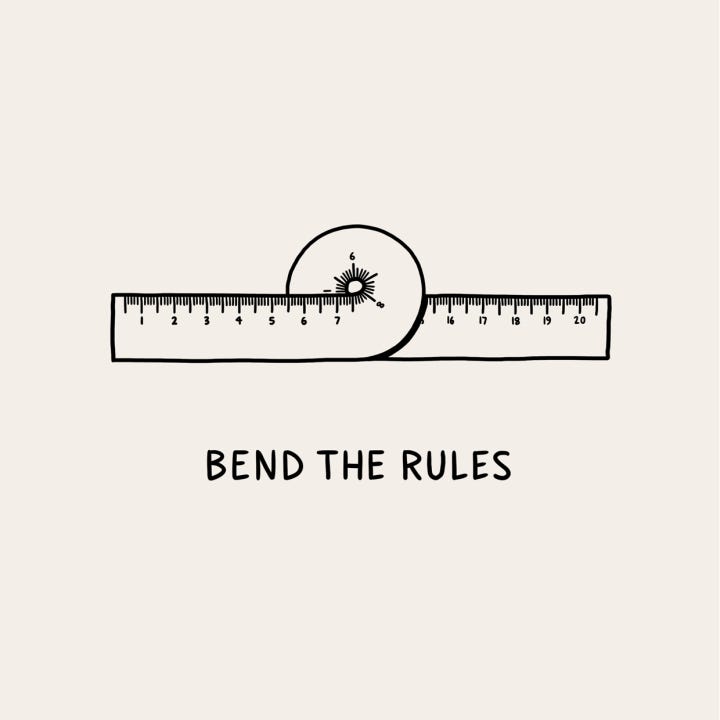
Leadership is often seen as a game of boundaries, systems, and adherence to established norms. But some of the most innovative and inspiring leaders don’t just follow the rules—they challenge them. When done with intention and integrity, breaking the right rules can demonstrate confidence, foster creativity, and drive progress in ways that conformity never could.
Here’s why bending the norms can be a powerful tool for leaders and how to do it without crossing ethical lines or undermining trust.

Rule-Breaking as a Signal of Confidence
Think about the leaders who leave lasting impressions. They’re not the ones who rigidly follow every protocol. Instead, they’re the ones who challenge conventions when those conventions no longer serve the team or the goal. Breaking minor rules signals confidence: it shows you’re comfortable enough in your role to prioritize results over unnecessary formalities.
For example, consider a leader who bypasses red tape to fast-track a critical project. The decision tells their team, “I trust my judgment and am willing to take responsibility for this choice.” This kind of bold action not only inspires trust but also sets a tone of empowerment for others to act decisively within their own roles.
Encouraging Creativity Through Irreverence
Rules and systems exist for good reasons, but they’re often built for a specific moment in time. As circumstances evolve, these structures can become stifling. When leaders step outside of conventional frameworks, they create room for fresh thinking and innovation.
Take, for instance, a team accustomed to formal presentations for every new idea. A leader who instead calls for a brainstorming session—without slides or bullet points—sends a message: creativity matters more than process. This small shift can unlock new perspectives, encouraging team members to think more freely and challenge their own assumptions.
The Difference Between Breaking Rules and Breaking Trust
Of course, not all rules are meant to be broken. Ethical leadership means knowing the difference between bending norms to foster progress and crossing lines that protect integrity. Breaking the wrong rules can erode trust, create confusion, or set damaging precedents.
To strike the right balance:
1. Understand the Purpose Behind the Rule
Before breaking a rule, ask: What is this rule meant to achieve? If it’s protecting people’s safety, fostering fairness, or maintaining accountability, it’s probably worth keeping. If it’s just a relic of outdated thinking, it may be worth challenging.
2. Communicate Your Intent
Breaking a rule in silence can look reckless. Clearly explain why you’re deviating and how it serves the greater good. Transparency reassures your team that your actions are deliberate, not arbitrary.
3. Respect Personal Boundaries
Breaking societal or professional norms can be powerful, but never at the expense of others. Violating personal or ethical boundaries undermines your credibility and the culture of respect you’re trying to build.
When Rule-Breaking Inspires Change
Some of the most impactful leaders didn’t just break the rules—they rewrote them. They challenged industry standards, dismantled outdated practices, and pioneered new ways of thinking. These leaders didn’t see rule-breaking as rebellion; they saw it as evolution.
For example, consider the leaders who redefined workplace flexibility, moving away from rigid 9-to-5 schedules long before remote work became mainstream. By questioning the norm, they created workplaces that better served their employees and set new standards for the industry.
The Risks and Rewards of Being a Nonconformist
Breaking rules is not without risks. It requires a willingness to accept responsibility if things go wrong. Leaders who challenge norms must also navigate resistance from peers, higher-ups, or even their own teams. The key is to be prepared to justify your actions with clear reasoning and to show that your decision aligns with long-term goals.
Equally important is the ability to adapt. If a bold move doesn’t pan out, a great leader reflects, learns, and recalibrates. This resilience demonstrates not just confidence but humility—two traits that go hand in hand when challenging the status quo.
Creating a Culture of Thoughtful Rule-Breaking
Leaders who challenge norms effectively also encourage their teams to do the same. They create cultures where questioning the status quo isn’t just allowed—it’s expected. Here’s how to foster that mindset:
1. Reward Initiative: Celebrate team members who think critically about existing processes and propose better solutions.
2. Model Courage: Demonstrate your willingness to take calculated risks and own the outcomes, good or bad.
3. Encourage Questions: Make it safe for people to ask, “Why do we do it this way?” and “What if we tried something different?”
Conclusion: Breaking Rules, Building Progress
Breaking the rules isn’t about anarchy or ego. It’s about knowing when the systems in place no longer serve the mission and having the courage to act. Leaders who do this thoughtfully and ethically don’t just inspire—they drive progress, foster innovation, and build trust in their teams.
So, the next time you find yourself staring down a convention that feels more restrictive than productive, ask yourself: What’s the worst that could happen if we broke this rule? More importantly, what’s the best that could happen if we did?