The Missing Sunset
In this dispatch
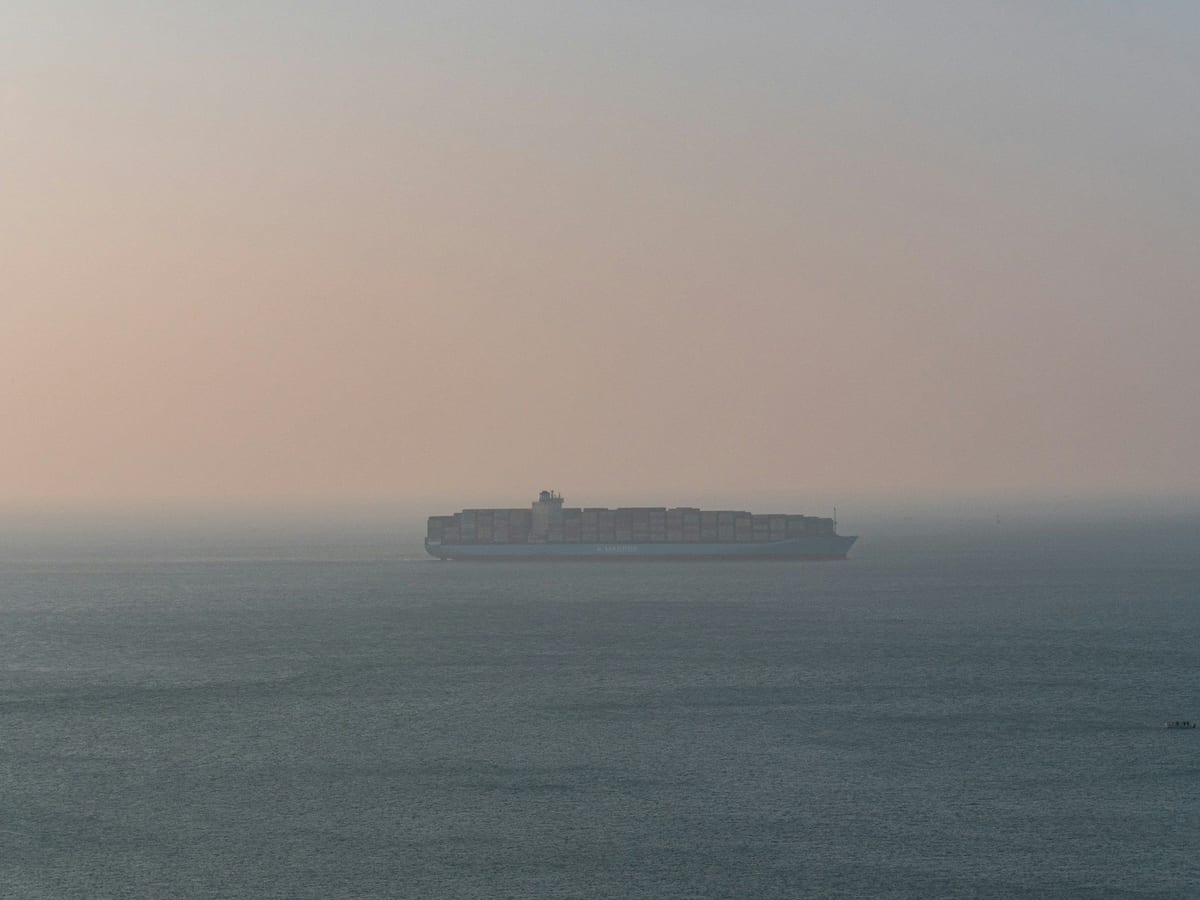
Pete Hegseth was in Panama on Thursday, talking to reporters about the Navy and the Strait of Hormuz. The duration he named was indefinitely. By 1:09 p.m. UAE time Friday, Brent was up 1.03 percent at $87.97 and WTI was up 1.62 percent to $82.56, both having printed nearly 2 percent higher earlier in the session, on track for a weekly gain of close to 6 percent.
Friday's tape treated it as a clock.
The sentence that never expires
Hegseth's line, as reported from Panama, had two halves: the duration, and the method. "Indefinitely, the United States Navy can maintain a blockade like that because we'll rotate ships in and out, as we have, and we'll continue to." Treasury Secretary Scott Bessent, in a Thursday interview on Newsmax, supplied the economic half. "Watch this space for more announcements coming next week because we are going to apply measures like have never been seen in the history of economic isolation on a country." He added that the mix would be "economic isolation the world has never seen before, and the continued blockade in the Strait of Hormuz that will keep anything from going in or out of the Iranian ports."
Iran's PGSA, posting on X on Wednesday, answered in the same tense. Claims that Hormuz is no longer blocked "do not change the reality," and the strait "will not be reopened until Iran's conditions are accepted." Ceasefire talks remain in deadlock. Iran closed the strait in early March, shortly after the war started. Al Jazeera dates the blockade of Iranian ports, and the U.S. blockade, to April 13, and reports that Iran has lost at least $6 billion in oil revenues since then.
The forecasts have already stopped treating this as a blip. The International Energy Agency now projects a 4.3 million barrel-per-day decline in 2026 supply, 600,000 barrels a day deeper than a month ago, after the continued closure of Hormuz and attacks in the Bab al-Mandeb. The EIA says oil through Hormuz averaged 4.9 million barrels a day in the second quarter, against 21.6 million in the last three months of 2025, and anticipates oil disruptions from the Iran war to reach 600,000 barrels a day until the end of next year. OPEC cut its 2026 global oil demand growth forecast to 580,000 barrels a day, the fourth consecutive downward revision. Ole Hansen at Saxo Bank put it in one sentence: "The war of words between Washington and Tehran leaves no clear path towards reopening the Strait of Hormuz." Emergency stock releases, he added, are "supply borrowed from the future."
An emergency with no sunset borrows the same way.
Rotation is logistics
Hegseth was answering a practical question about whether the Navy can hold the line. His answer was yes, by rotation, as they have, and as they will continue to. That is how you keep hulls on station.
A date does different work.
Rotation tells you the fleet can stay. A sunset tells you who still has to justify the stay, in public, against a calendar that does not move by silence. "We will rotate" keeps the ships and leaves the mission unreviewed. "Until this is over" has the same shape: the condition is the emergency, and the emergency is defined as whatever has not yet ended. You cannot fail a test you never scheduled.
Now, I know what some of you are thinking: indefinitely is the honest word, the strait is closed, talks are dead, and a fake review date would be theater, a calendar entry for people who want a war to behave like a quarterly close. I take that seriously. You can tell the truth about how long a navy can remain on station and still refuse to name the meeting at which the posture itself gets argued again. Theater is a date nobody can enforce. A sunset is a date a named person can move, in the open, with a reason the institution has to hear. The difference is the reviewer, not the ink.
The shadow is permanence
Here's the truth: when a leader cannot name when the emergency ends, the institution has already converted a Crisis posture into the new default.
In Honor Under Pressure I call this Marshall Mode: embedding a wartime posture so thoroughly the institution forgets it was supposed to be temporary. Marshall's gift was transmission; the shadow is making the temporary permanent. The organization keeps the wartime staff meeting, the wartime exception, the wartime hours, and then it stops calling them wartime. They are just how we work now.
Washington Restraining declines extra power because the next person will cite what you did. Washington's two-term precedent was a sunset (he could have stayed; the next person would have cited the stay). The restraint was the institution. An indefinite blockade, even a competent one, teaches the other lesson. The Crisis posture is available for as long as the ships can rotate, which is another way of saying it no longer has to ask.
I see this from two chairs. Duration is a cost structure: you can fund a Crisis posture for a quarter, then a year, until the special becomes the run-rate and the next cohort inherits a default nobody remembers voting on.
Trump, speaking to Axios on August 9, described the administration's handling of the war as "low-keying it." I will not invent a second sentence for him. Low-keying a war can be discipline, and it can also be how an emergency loses its edges without ever being reviewed. The public gets less ceremony. The sailors get the same sea.
Two hundred and sixty days
CENTCOM posted on X on Friday, August 13, that "The Sailors and Marines of the Abraham Lincoln Carrier Strike Group remain resilient and resolved after more than 260 days at sea." That number is theirs. The command also denied reports of seven sailors killed in a brawl and denied claims about suicidal ideation: "No service members aboard the aircraft carrier have died, and the one sailor who fell overboard on August 3 was quickly and safely recovered." Navy Times and Stars and Stripes cited family members on morale and mental health. Hegseth called those reports "completely misrepresented." I am treating the harm claims as contested. They are not the load-bearing evidence.
What is not contested is the calendar. Senator Richard Blumenthal sent Hegseth a letter stating that the Lincoln left San Diego last November with more than 5,000 sailors and Marines, that she has been "continuously at sea for a record length of nearly seven months," and that the deployment surpasses any previous U.S. carrier deployment without a port stop. The letter is a fact. The characterizations inside it are his claims. CENTCOM's own "more than 260 days" is the number that matters. Two hundred and sixty days is what a missing sunset costs, whether or not the disputed reports hold.
Reports on Friday said the USS George Washington, currently in the Pacific, has begun heading toward the Middle East. I am marking that as reported, and I cannot tell from this desk whether that is the next rotation or the next embedding of a wartime default that still has no review date. That question stays open.
Write the sunset
Write the date you will review the emergency posture, in language that cannot be rolled forward by silence. Name the person who has standing to say the date moved. Put both in the same sentence.
A working version is ugly on purpose. "We will review this blockade posture on October 15, and the chair of the committee can declare that the date moved" is a sunset. "We will rotate ships until the mission is complete" is a logistics plan. "Until this is over" is not a date. "We will rotate" is not a review.
The same sentence belongs in a company. The hiring freeze you called temporary in March, the exception lane you opened for a Crisis customer, the all-hands cadence you installed for a bad quarter: write the review date, and write the name of the person who can tell you that you quietly kept it. If you cannot name those two, the emergency has already become the operating system, and you are hoping nobody notices the conversion.
Hansen is probably right that Friday's words leave no clear path to reopening Hormuz. A sunset would not reopen a strait Iran says stays closed until its conditions are accepted. The governance job is still the job. You review it because the decision is still yours, not because the other side has agreed to make your calendar convenient.
Bessent told the audience to watch next week. Watch the date, if one appears. Watch who is allowed to move it. If none appears, the institution has already answered.
You can find your own default in about five minutes; the Mode Finder at thefourthturningleader.com is free. It names the pattern you reach for when the temporary starts to look like the job.
The Only Thing That Still Scales
When institutions decay and the tools built for stability stop working, character becomes the rarest competitive advantage there is.
The Forty-Mile Hostage Crisis
Twenty million barrels a day. Forty miles of open water. Fifty years of pretending this couldn't happen.