Part of: The Leadership Honor Code
The Counter-Cohn File
Part of the Leadership Honor Code cluster
In this dispatch
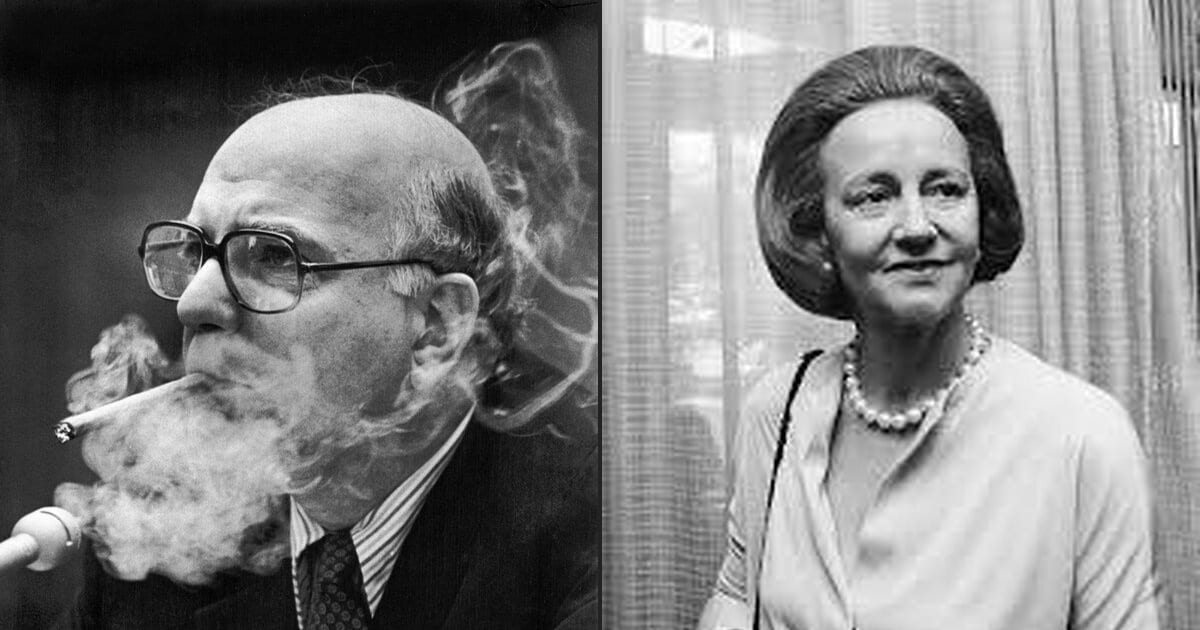
Last week I made the case for honor against the most successful operating system of the decade. I argued that Roy Cohn’s playbook, the one built on attack, denial, and the refusal to ever apologize, has won more visible victories in the past ten years than any competing approach to power, and that we should hold to a code anyway. The most common reply was also the most honest one. Several readers, most of them people who run things, wrote some version of the same question: I want to believe you, but where is the proof? Principle is fine, but I have payroll on Friday. Show me a leader who won because of the code, not despite it.
That is a fair demand, and this essay is my attempt to meet it. I am not going to argue that honor always wins, because it does not, and pretending otherwise would be its own kind of dishonesty. What I am going to argue is narrower and, I think, more useful: over long horizons, the honor playbook compounds in ways the Cohn playbook structurally cannot, and the evidence sits in stock charts, bond yields, and the careers of people who bet their institutions on principle and watched the bet pay. The problem is that the evidence arrives slowly, while the pressure to abandon the code arrives fast. So the practical discipline is learning to keep the evidence where you can find it on a bad day.
The Widow Who Bet the Company
Start with a Thursday in June of 1971. Katharine Graham was hosting a retirement party at her home in Georgetown when the phone calls started. Her editors and lawyers were gathered at Ben Bradlee’s house across town, shouting at each other over four thousand pages of the Pentagon Papers, the classified history of the Vietnam War that Daniel Ellsberg had leaked. The New York Times had published excerpts first and had just been silenced by a federal injunction, the first time in American history a court had stopped a newspaper from printing a story in advance. Now the Post had its own copy, and the question of whether to publish had been kicked all the way up to Graham, a woman who had never wanted the job, who had inherited the paper after her husband’s suicide eight years earlier, and who was so unsure of her own judgment in that era that she rehearsed toasts to her own family.
The timing could hardly have been worse, and this is the part of the story that gets sanded off in the retelling. The Washington Post Company had gone public that very week. The stock had been trading for two days. The underwriting agreement allowed the bankers to unwind the offering in the event of a criminal indictment, and publishing material the government had just declared a threat to national security was a plausible route to one. The company’s television licenses, which generated the majority of its profits, were held at the pleasure of a federal government that had just gone to court to stop this material from seeing daylight. Her lawyers and her business advisors told her not to publish. Frederick Beebe, the board chairman she trusted most, guessed aloud that he would not publish, then told her the decision was hers.
Think about what was actually on the table in that moment. Not a reputational risk. Not a bad news cycle. The company itself: the inheritance she held in trust for her children, the institution her father had bought at a bankruptcy auction, the livelihoods of everyone in the building. Against that stood a principle that must have felt almost abstract by comparison, the idea that a newspaper that lets the government decide what it prints is no longer a newspaper. Graham later wrote that she was frightened the entire time. She took a breath and said, “Let’s go. Let’s publish.” The story ran the next morning. Two weeks later the Supreme Court ruled six to three in the papers’ favor, and the Post walked out of the Pentagon Papers crisis transformed. It had been a respectable regional paper. It was now, in the eyes of everyone who mattered, the peer of the New York Times. It had purchased that standing with a single decision no spreadsheet would have approved.
The Second Test Is Always Harder
Here is the thing about codes: the first test establishes them, and the second test prices them. Graham’s second test arrived a year later, in June of 1972, when five men were arrested inside the Democratic National Committee offices at the Watergate complex, and her paper, nearly alone, refused to drop the story. For months the Post was exposed in a way that is difficult to appreciate now, when we know how the story ends. Most of the national press treated Watergate as a minor burglary, and the White House denounced the coverage as fiction. Then the pressure became specific: challenges materialized against the licenses of the company’s Florida television stations, the profit engine of the whole enterprise, filed by groups with conspicuous ties to the President’s allies. On the White House tapes, Nixon can be heard saying that the Post would have damnable problems over those licenses. The company’s newly public stock lost roughly half its value.
This is the moment the Cohn playbook exists for: faced with that kind of state pressure, settle quietly, soften the coverage, make a private accommodation, declare victory. Every incentive pointed that direction, and Graham was not a crusader by temperament. She was a fifty-five year old widow who hated confrontation and knew exactly how much money was burning. She held anyway. She backed Bradlee, backed two young metro reporters named Woodward and Bernstein, and absorbed the losses. The line did not move. This is Holding in its purest form, the Cato posture: a position defended not because the defender is certain of winning but because the position itself is the point. Cato’s line was the Roman constitution. Graham’s line was the independence of the front page. In both cases the leader decided, in advance, that there were prices the institution would pay before it would move, and then paid them in public.
What the Ledger Showed Ten Years Later
Now let me be honest about the scoreboard. In the short run, the code cost the Post enormously. The stock decline was real money, the legal exposure was real, and the stress on Graham was, by her own account, nearly unbearable. If you had audited the honor playbook in December of 1972, it would have looked like a luxury the company could not afford, and the Cohn playbook would have looked like prudence. The attack-and-deny operating system genuinely does win short games, and anyone who tells you otherwise is selling something.
But watch what happened next, because this is the part Cohn’s heirs never model. In 1973, with the stock still depressed by the license fights, Warren Buffett put a little over ten million dollars into Washington Post stock. His reasoning amounted to this: the market was pricing the controversy, and he was pricing the institution; the same stubbornness that was costing the company money was also the moat around it. That stake, held for four decades, grew more than a hundredfold and became one of the most famous investments in American history. The Post won the Pulitzer for public service in 1973. The President who had threatened its licenses resigned in 1974. And for the next generation, the Post enjoyed something almost no competitor could buy at any price: it was the paper sources called first, the paper talent fought to join, the paper whose publisher had been tested at the level of survival and had not blinked. Graham ran the company until 1991 and delivered compounded returns that outperformed nearly all of her media peers. The honor was not a tax on the returns. The honor was the source of the returns.
The Post story also carries a second mode, Embedding, the Marshall posture: building the thing that outlasts you. Graham’s decisions in 1971 and 1972 did not just win two news cycles. They wrote the Post’s constitution. For decades afterward, every editor and reporter in that building knew what the institution had been willing to pay, and that knowledge did more to govern behavior than any ethics memo ever could. A code that has been paid for becomes load-bearing. A code that has never cost anything is decoration, and everyone inside the building can tell the difference.
The Man Who Chose to Be Hated
If Graham shows the code paying off for a company, Paul Volcker shows it paying off for something much larger. When he took over the Federal Reserve in 1979, inflation was running near fourteen percent and, more dangerously, nobody believed the government would ever seriously fight it, because every previous chairman had retreated the moment unemployment rose. Volcker’s insight was that the credibility could only be repurchased with pain, publicly and visibly endured. He drove interest rates past twenty percent and held them there through the worst downturn since the Depression. Farmers blockaded the Fed’s headquarters with tractors. Homebuilders mailed him sawed-off two-by-fours, pieces of the houses they could no longer build. He was burned in effigy and pressured relentlessly by the administration that had appointed him. Unemployment reached nearly eleven percent.
He did not move, and by 1983 inflation had fallen to around three percent. But the number understates the achievement. What Volcker actually built was two decades of anchored expectations: an entire generation of investors, workers, and businesses that made long-term commitments because they believed the central bank meant what it said. Every thirty-year mortgage written at a sane rate in the 1990s was, in a real sense, drawing on the credibility account Volcker funded with his own reputation. That is what I mean when I say trust functions as a balance-sheet asset. It appears on no balance sheet, but it changes the price of everything on all of them. And notice how it was acquired: not claimed, asserted, or marketed, but demonstrated, at cost, over time, in exactly the way Cohn’s method forecloses. A man who never absorbs a loss can never prove there is anything he values more than winning, and so no one can ever safely extend him credit of any kind.
Why the Code Compounds
The Cohn playbook and the honor playbook are not really competing strategies for the same game. They are strategies for different time horizons. Attack, deny, and never apologize is superbly engineered for single interactions with counterparties you will never see again. It harvests trust without replanting it. The honor playbook is engineered for repeated games with counterparties who remember, and almost everything that matters in a real business is a repeated game: your bank relationships, your regulators, your senior team, your customers, your own children watching how you handle a bad quarter.
Here is the truth: the returns to the code show up in three specific places, and all three compound. The first is the cost of trust. When your counterparties believe your word, every transaction gets cheaper, faster, and simpler; when they do not, everything requires collateral, verification, and lawyers. I see this weekly at B:Side, where SBA lending moves enormous sums on the strength of representations, and the bank partners who have been straight with us for a decade get the benefit of the doubt on a close call, while the ones who shaded the truth once get nothing on trust again. The second is talent. The best people, the ones with options, will not spend their careers executing someone else’s cynicism, and the Cohn-style operator is left, over time, commanding only those who could not leave. That is an adverse selection machine running against you every single year. The third is the ability to make hard calls stick. When Graham asked her newsroom to endure the Watergate siege, they endured it, because she had already shown them what she was willing to pay. A leader with no record of costly principle can issue the same order and watch it dissolve, because everyone assumes the order will be reversed the moment it gets expensive. Authority in a crisis is nothing more than the accumulated memory of what you did the last time it was hard.
And on the other side of the ledger, remember how the original story ends. Roy Cohn, the author of the winning operating system, died in 1986 disbarred, broke, abandoned by nearly everyone he had elevated, denying to the end the illness that was killing him. The playbook worked until the exact moment he needed anyone to stand with him at a cost to themselves, and then it turned out he had spent forty years teaching everyone he knew that costly loyalty was for suckers. They had learned the lesson.
Keeping the File
So what does a working CEO actually do with all this? The honest answer is that none of it helps you in the abstract, because the moment the code gets expensive, your own stress will argue like a trial lawyer for the Cohn option. It will sound like prudence. It will sound like fiduciary duty. In my experience, willpower alone does not win that argument. Evidence does. Which is why I have come to believe every leader should keep what I have started calling a counter-Cohn file: a literal, written record of the occasions when the code paid, kept close enough to reach on the worst day of the year.
This is less mystical than it sounds, and it maps directly onto what I have called The Test in the honor code, the honest ledger of what your code has cost and what it has returned. In practice it looks like this. Write down the wins the code produced. The deal you got because the other side had been burned by someone slicker and wanted a counterparty they could trust. The hire who took less money to work somewhere that would not embarrass her. The bank partner who stayed through a rough stretch because of how you handled the last one. At B:Side we can point to specific relationships that exist only because of how we behaved when a loan went sideways and it would have been cheaper, that quarter, to behave differently. If I had not written those down, I would misremember them as luck. Write down the costs too, honestly. The file is worthless as propaganda. Record the business you lost by refusing to shade a number, and record it accurately, because the file’s authority on a hard day depends on your knowing it was compiled by someone who was not lying to himself. Review it before the pressure arrives, not during. I reread mine at the start of every quarter, the same way I review our credit exposure, and for the same reason: so the picture in my head reflects the whole cycle and not just the current weather. And date every entry, because the pattern is the point. Individual entries look like anecdotes. Ten years of entries look like what they actually are, which is a return series.
One more thing belongs in the file, and it is the entry that matters most: the record of what you have decided in advance you will not do. The Line, decided in the calm, written down, witnessed by your own handwriting. Graham did not reason her way to principle on the night of June 17, 1971, with the lawyers shouting on the phone. The reasoning had been done slowly, over years, in her bones and in her father’s example, and the night merely called the question. The file is how you do that slow reasoning on purpose instead of hoping it accumulates by accident.
I ended the last essay by conceding that the Cohn Doctrine wins, and I am not taking it back. It wins the quarter. It wins the news cycle. It wins every game short enough that memory does not matter. But Katharine Graham’s company outlived and outgrew every rival that played it safe, and Paul Volcker’s signature is still legible in every anchored inflation expectation forty years on, and Roy Cohn’s estate was consumed by his creditors. The code is not a handicap you accept for the sake of your soul. Over any horizon long enough to matter, it is the best investment on the books. Keep the file, so that on the day the pressure comes, you will not have to take my word for it. You can take your own.
The Cohn Doctrine
It has been the most successful operating system of the decade. Here is the case for honor anyway.
Leaving Power on the Table
Voluntary limitation built the American experiment. Its absence is showing up everywhere leadership matters, and the bill is coming due