What You Won't Let the Model Decide
In this dispatch
The models will keep getting more capable. The leadership question that does not answer itself is what you will refuse to hand them, and you have to answer it before the pressure arrives.
Every conversation about artificial intelligence, in boardrooms and classrooms and the endless scroll of commentary, still orbits the same question: what can the models do now? Can they underwrite a loan, draft a brief, diagnose a scan, write the strategy memo? The answer keeps changing in one direction, and no essay of mine will alter the slope.
The question that will quietly define your leadership over the next decade runs the other way: what will you not let the model decide, even when it can? That is a governance question. Its answer only counts if you fix it in advance, before the capability arrives, before the cost savings are quantified, before the board deck makes delegation look like fiduciary duty.
In Honor Under Pressure I call this the Line: the non-negotiables a leader decides in the calm, precisely because the moment of pressure is the one moment you can't trust yourself to decide them well. The oldest discipline in the honor code is also the newest requirement of the technology.
Twenty-three minutes in a bunker
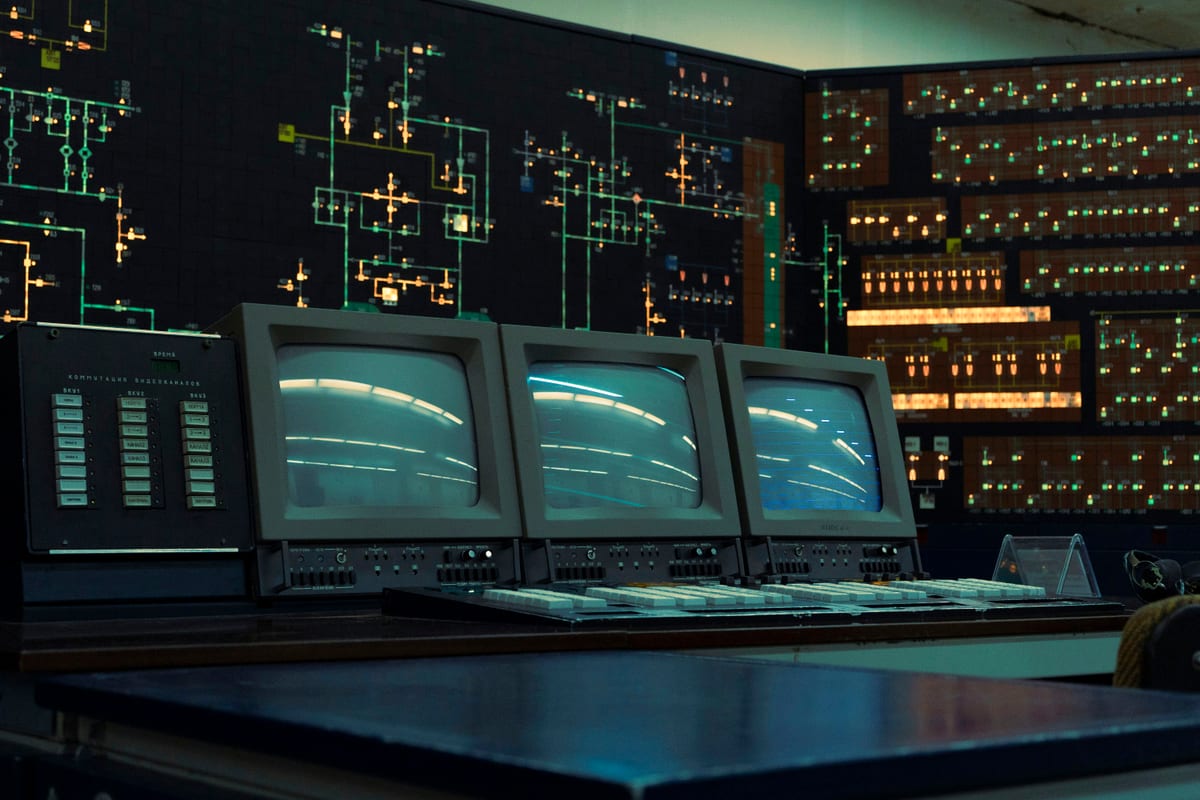
The best illustration I know of what a human decision is actually for happened just after midnight on September 26, 1983, in a concrete bunker called Serpukhov-15, south of Moscow. Lieutenant Colonel Stanislav Petrov was the duty officer that night, monitoring Oko, the Soviet Union's new satellite early-warning system. Oko existed to answer one question, the most consequential question a machine has ever been assigned: is the United States launching a nuclear attack?
A few minutes past midnight, the system answered yes. Sirens sounded. A backlit screen switched to the single word LAUNCH. The computer reported an American Minuteman missile in flight, at the highest confidence the system could express. Then it reported a second missile, then a third, then a fourth, then a fifth.
His job was procedural: verify the readings and pass the warning up the chain, where men with minutes to decide would act on it. Three weeks earlier the Soviets had shot down Korean Air Lines flight 007, killing everyone aboard, and both superpowers were rehearsing for a war each believed the other might actually start. Every institutional incentive pointed toward compliance.
He did not pass it up. The sirens were going, and he reasoned, under a kind of pressure I hope none of us ever meets, about what the machine could not know about itself. A real American first strike would come as an overwhelming barrage, hundreds of missiles, not five. Ground radar, a completely separate system, showed nothing coming over the horizon. The satellite network was new, and he knew its readings had quirks the manual did not admit. None of this was proof.
He later said the odds felt close to even, and that he was never fully certain. He simply judged that the machine's confidence was not the same thing as truth, picked up the phone, and reported a system malfunction.
He had. The satellites, it was later determined, had mistaken sunlight glinting off high-altitude clouds for the exhaust plumes of missiles.
The system performed its analysis flawlessly given its inputs. Every calculation was correct. What failed was something no additional computation could have supplied: the judgment that the whole frame might be wrong, exercised by a man willing to be personally destroyed if his judgment failed. Petrov was not rewarded, incidentally. He was reprimanded over paperwork, sidelined, and retired in obscurity; the world only learned his name years later.
He absorbed the full moral weight of the decision precisely because a decision is not a computation. That is the distinction our current moment keeps trying to blur.
Judgment cannot be transferred
Analysis is the work of processing information: gathering it, structuring it, finding the pattern, projecting the trend, drafting the options. It has inputs and outputs, and its quality can be checked against the world. Judgment is the act of committing to a choice under uncertainty and owning what follows. It carries three properties that analysis does not, and none of them transfer to a machine, not because machines are weak but because the properties are not computational.
The first is accountability. When a decision goes wrong, someone must be answerable. A model can't be demoted, can't feel shame, can't stand in front of the team it harmed. Delegating a decision to a system that can't be accountable does not eliminate the accountability; it just renders it ambient and deniable, which is another way of saying it corrodes.
The second is moral weight. Some decisions refuse to be scored, because they involve commitments we have made to people: who to lay off, whether to stand by a struggling borrower, whether to keep a promise that has become expensive. Running those through a model disguises the fact that you answered the moral question by defaulting.
The third is stakeholder trust. People extend trust to institutions because they believe a human being with skin in the game stands behind the institution's word. The moment they suspect the word is generated, the trust does not transfer to the generator. It simply exits.
Humans are hardly reliable judges themselves. We are biased, tired, inconsistent, and the literature on human decision-making is a catalog of embarrassments. On pure analytical accuracy, the models already beat most of us most days, and the honest response is to hand them more of the analysis, not less. I'm not writing a nostalgia piece.
Judgment was never valuable because humans were accurate. It's valuable because someone must be committed, answerable, and present, and only a person can be those things. Petrov's ground radar was more accurate than Petrov. It still could not have made his decision, because his decision was not a reading. It was an act of responsibility.
What the file cannot capture
At B:Side, I see the economics of delegation, and I want to be honest with you: they are stunning. In small business lending, the analytical layer of our work, the spreading of financials, the first-pass credit narrative, the document review, the portfolio surveillance, is exactly the kind of structured cognitive work the models now do quickly and well. The cost curve only bends one way, and a lender who refuses the analytical help will be underpriced by lenders who accept it. I have no intention of being that lender. We use these tools, and we will use them more next year than this year.
However, a loan decision is more than analysis. Somewhere inside every approval is a judgment about a human being: whether this founder will grind through the bad eighteen months, whether this family business is telling us the truth about why last year was ugly, whether the community context around this deal means something the file cannot capture. When a borrower gets into trouble, as some always do, the question of how we treat them, whether we work the problem with them or move straight to protecting ourselves, is a promise-keeping question, not a pattern-matching one. The economics whisper that all of it could be automated, and the whisper gets a little louder every quarter as the drafts get a little better. That is precisely why the boundary cannot be left to the economics.
I watch the same drama at the other end of the pipeline, in the classroom at ASU. My students have absorbed the tools completely, and much of what they do with them is legitimate; I have no interest in policing whether a machine helped polish a paragraph. When I press a student to defend a conclusion, I increasingly meet a strange passivity, a shrug that says the reasoning happened somewhere else and arrived finished. They did not skip the writing. They skipped the deciding.
I'm watching the first generation that can outsource its judgment before ever having developed any, and I don't think we have begun to price what that costs. The lending work gets faster with the tools, and I will take that speed. Done indiscriminately, the same move is the quiet surrender of the faculty the speed was supposed to serve. Both observations are right, and the only way to honor both is a boundary drawn on purpose.
The pressure arrives dressed as prudence
When the pressure to delegate judgment arrives, it will look like diligence, not like temptation. It will be a benchmark showing the model's recommendations outperforming your credit committee's. It will be a consultant's slide quantifying the cost of human latency. It will be a competitor's press release, or a board member's pointed question. Each step will be individually defensible, and that is exactly the problem.
Nobody ever stands in a conference room and proposes abandoning human judgment. They propose a pilot.
This is why the line must be drawn before the capability arrives. A line drawn under pressure is not a line; it is a negotiation, and you already know how negotiations with compounding cost curves end. The leaders who held under pressure, Cato refusing to let the line move, Washington refusing power that was his for the taking, share a single structural secret: the refusal was decided long before the moment that tested it. Washington's restraint at Newburgh was not improvised in front of his mutinous officers. It was the enactment of a rule he had set for himself years earlier about what a republic's general must never do.
The Restraint declines extra power because the next person will cite what you did. The Restraint, knowing when not to act, when not to grab what is grabbable, is the rarest discipline in leadership, and delegation to machines is about to become its defining test. The power on offer is deniability, not a crown: the quiet, reasonable option of letting the system decide, cheaper every quarter, and being able to say the system decided.
Writing the delegation charter
A conviction without a mechanism is just a mood. I believe every organization above a certain size now needs what I have started calling a delegation charter: a short, written, board-visible document that sorts your decisions into three tiers before the vendor demos start. Argue it while nothing is at stake, so that it exists when everything is.
Tier one: decisions the model drafts. This is the analytical layer, and the charter should be generous here, more generous than your cautious instincts want. First-pass analysis, document synthesis, forecasting, option generation, anomaly detection, the eighty percent of cognitive work that is structured and checkable. Name these explicitly, resource them properly, and hold your teams accountable for using the tools well. Stinginess in tier one is how you lose the economic race, and losing that race means someone with no charter at all takes your market.
Tier two: decisions the model informs. These are judgments a named human owns, made with the model's analysis on the table but never with the model's conclusion adopted by default. The charter should require the Petrov posture: the human must be able to articulate, in their own words, why the recommendation is right before acting on it, and must have standing and explicit permission to overrule it without career damage. If overruling the model requires courage, your charter is fiction, because you have made the machine the boss and the human the liability. Audit whether overrides actually happen; a tier two with a one hundred percent concurrence rate is a tier one wearing a costume.
Tier three: decisions the model never touches. People, principles, promises. No model decides who gets hired, promoted, disciplined, or laid off; it may inform, and a human must give the real reasons in their own voice. Anything touching your Line, what you will not do for money, stays off the table, because a system hunting for the cheaper path cannot hold a commitment whose entire value is that it does not bend. Any decision that amounts to keeping or breaking your word, to a borrower, an employee, a partner, a community, stays human, because a promise kept by an algorithm was never a promise. Write the list plainly enough that a new employee could recite it, and treat any migration from tier three toward tier two as a constitutional amendment, never a product update.
Then, once a year, run the ledger honestly. What has the charter cost you in speed and money? What has it preserved in trust, in judgment reps for your rising leaders, in your own ability to sleep? Keep the accounting real. A charter you have never paid anything for has not yet been tested, and you do not actually know if it exists.
The drafts will keep getting cleaner, and the case for handing over one more decision will keep getting more reasonable. Nothing about that trend is your decision. What remains yours is the boundary, set while it is still cheap to set. Petrov's whole legacy fit inside one refusal that lasted twenty-three minutes. Decide now which decisions you will keep, while the sirens are quiet, because the one thing the model will never be able to tell you is where it should not be trusted.
You can find your own default in about five minutes; the Mode Finder at thefourthturningleader.com is free. It names the pattern you reach for when the cheaper option is to stop showing up as the accountable human.
Photo: Igor Saikin / Unsplash
Values Based Leadership Versus Compliance
Values based leadership versus compliance: learn how CEOs turn stated principles into decisions, records, and institutional trust under pressure in crisis.
AI Writing Coach for Leaders Under Pressure
An AI writing coach for leaders turns difficult decisions into clear, durable records before pressure, politics, and institutional drift take control away.